

The Recall Is Upstream. Your Product May Still Be at Risk.


What the Current Fresh Jalapeño Salmonella Outbreak Teaches Food Producers About Protecting Their Products
A food producer can have a strong HACCP plan, a well-maintained facility, trained employees, established sanitation programs, and carefully controlled production processes and still find its products connected to a recall because of something that happened before an ingredient ever entered the facility.
A current food safety event provides an important reminder of how quickly an upstream problem can move through the food supply chain.
On August 8, 2026, USDA's Food Safety and Inspection Service issued a public health alert for various meat and poultry products containing FDA-regulated jalapeños that had been recalled due to possible Salmonella contamination. The alert followed an ongoing FDA investigation involving recalled fresh jalapeños from Sinaloa, Mexico, distributed by Coast Citrus Distributors and linked to a multistate outbreak of Salmonella Javiana, a serotype of Salmonella bacteria that can cause foodborne illness.

The meat and poultry products were not the original source of the ingredient recall. They became involved because recalled fresh jalapeños had entered products regulated by FSIS.
That distinction matters.
It demonstrates something every food producer needs to think about: the safety and regulatory integrity of a finished product depends not only on what happens inside the operation, but also on the ingredients and materials entering it.
An upstream ingredient failure can quickly become a finished-product problem, a regulatory problem, a customer problem, and a business continuity problem.
Food Safety Starts Before Production
Much of food safety naturally focuses on what happens within the walls of a facility.
Cooking temperatures. Cooling rates. Sanitation. Allergen controls. Employee practices. Environmental monitoring. Packaging. Storage.
All of those controls matter.

But the food safety system starts earlier.
Every ingredient entering a production facility arrives with its own history. It may have been grown, harvested, slaughtered, processed, transported, stored, repacked, or distributed by several businesses before reaching the producer who incorporates it into a finished product.
Fresh produce provides a particularly clear example.
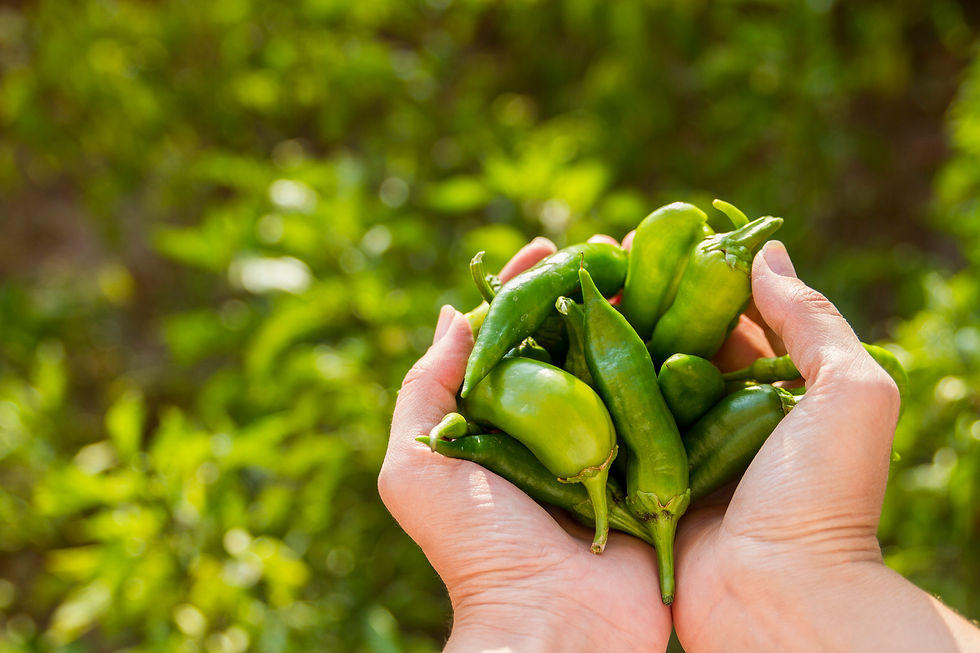
A fresh jalapeño entering a processing establishment may seem like a relatively simple ingredient. Yet that pepper brings with it considerations related to growing and harvesting conditions, handling, transportation, distribution, storage, contamination potential, supplier controls, and the way it will ultimately be used in the finished product.
The same principle extends far beyond produce.
Spices, seasonings, dairy ingredients, nuts, oils, dry ingredients, imported foods, processing aids, packaging materials, and other incoming materials can introduce biological, chemical, physical, or allergen hazards into an otherwise well-controlled production system.
A strong food safety system therefore looks beyond one question:
Is our production process under control?
It also asks:
What are we bringing into that process?
Supplier Relationships Are Part of the Food Safety System
Purchasing decisions are food safety decisions.
Knowing the name of a supplier is only the beginning. Producers need to understand what they are purchasing, the specifications that apply, what hazards may reasonably be associated with the ingredient, and what controls are being applied before it reaches their facility.
For FDA-regulated facilities subject to applicable preventive control requirements, supplier approval and verification may be required when a hazard requiring a supply-chain-applied control has been identified. Those activities are risk-based and tied to the hazard and supplier performance.
No matter which regulatory framework applies, the bigger point is the same.
You need to know why you trust the ingredients coming through your door.
That confidence requires more than familiarity with a salesperson or years of ordering from the same distributor.
It requires a system.
Documentation Needs to Mean Something
Letters of Guarantee can be one part of that system.

A Letter of Guarantee can document important assurances regarding the regulatory status, identity, composition, safety, allergen status, intended use, or other applicable characteristics of an ingredient or material.
But having a Letter of Guarantee sitting in a supplier file does not, by itself, control a hazard.
Its value depends on what is actually being guaranteed, whether those assurances are appropriate for the ingredient and intended use, whether the document remains current, and how it connects to the producer's food safety system.
The same principle applies to Certificates of Analysis.
Where appropriate, a COA can provide lot-specific information about testing performed on an ingredient or material. Depending on the product, hazard, and regulatory framework, supplier testing and analytical documentation may form part of a broader verification system.
But a COA should never become another document that is simply collected and filed.
It is not enough to file the COA.
You need to understand what was tested, what the result actually tells you, whether the certificate corresponds to the lot you received, and whether the testing provides meaningful information about the hazard associated with that ingredient.
A negative test result is information.
It is not a guarantee that the ingredient is free of every possible hazard.
Fresh Produce Requires Its Own Food Safety Thinking
The current jalapeño investigation also highlights an important issue for producers using fresh ingredients.
FDA has identified the recalled product as fresh jalapeños from Sinaloa, Mexico, distributed by Coast Citrus Distributors. As part of its traceback investigation, FDA identified a common grower in Sinaloa supplying the distributor as the likely source associated with the outbreak. The investigation remains ongoing.
Fresh produce needs to be handled with an understanding of both its contamination potential and the limitations of the controls available at the processing facility.
Appropriate cleaning and washing practices can reduce soil, debris, and microbial contamination and can help control cross-contamination during handling.
But washing fresh produce is not equivalent to a validated lethality treatment.
That distinction becomes particularly important when fresh produce or another raw ingredient is added after a product has already received its lethality step.
Consider two products that both contain fresh jalapeños.
In one process, the fresh jalapeños are incorporated before a validated thermal process capable of controlling the identified pathogen.
In another, the product receives its lethality treatment, is cooled, and the fresh jalapeños are added afterward.
The ingredient may be the same.
The food safety implications are very different.
This is why ingredient hazards cannot be evaluated separately from the production process.
Where did the ingredient come from?
How is it handled?
Where does it enter the process?
What happens to it afterward?
What are the characteristics of the finished product?
All of those pieces matter.
Training Keeps the System Working
Even a well-designed supplier and ingredient control system depends on the people carrying it out.
Receiving personnel need to recognize when required documentation is missing, when lot information does not match, when product or packaging condition creates concern, and when an ingredient needs to be placed on hold rather than moving directly into inventory or production.
Production employees need to understand why ingredient identity, lot control, handling practices, sanitation, and the point at which an ingredient enters the process matter.
Supervisors and food safety personnel need to understand how to respond when a supplier notification, recall notice, COA, Letter of Guarantee, receiving record, or ingredient condition raises a question.
Training cannot be limited to the day an employee is hired or the day a food safety program is first implemented.
It needs to stay active as suppliers, ingredients, formulations, processes, hazards, regulatory requirements, and internal procedures change.
A written system describes what needs to happen.
Regular training helps turn that written system into what actually happens on the production floor.
Traceability Matters Most When Something Goes Wrong
No supplier approval program can promise that a supplier problem will never occur.
When one does, traceability becomes one of the producer's most important protections.
The current jalapeño investigation demonstrates how quickly that need can become real. FDA has advised businesses with affected fresh jalapeños to work with their suppliers to determine the source of their product and to remove recalled product from use. FDA has also directed affected businesses to carefully clean and sanitize surfaces and containers that contacted the recalled jalapeños because of the potential for cross-contamination.
For a producer, that means being able to connect an incoming ingredient lot to what happened next.
When was it received?
Where did it go?
Which production lots used it?
Which finished products contain it?
How much product remains under the producer's control?
Where was the rest distributed?
Strong traceability can turn those questions into answers rather than an investigation that begins from scratch.
Supplier records, receiving documentation, lot identification, production records, finished product coding, inventory control, and distribution records all become connected pieces of the response.
Traceability does not prevent contamination.
It gives the producer the ability to respond quickly and define the scope of affected product when a problem occurs.
Protecting the Finished Product Requires Layers
There is no single document or control that protects a producer from every recall.
A Letter of Guarantee cannot do that.
Neither can a Certificate of Analysis.
Neither can washing an ingredient, supplier approval, receiving inspection, testing, training, or traceability on its own.
The strength comes from how the pieces work together.
Supplier qualification establishes who a business is purchasing from.
Ingredient specifications establish expectations.
Letters of Guarantee document applicable assurances.
Certificates of Analysis may provide additional verification where appropriate.
Receiving practices evaluate what actually arrives.
Ingredient handling and sanitation help control contamination and cross-contamination.
Regular training gives employees the knowledge needed to recognize and respond to problems.
Hazard analysis connects the ingredient to the actual production process.
Lot coding and traceability connect incoming materials to finished products and customers.
These are not isolated documents or activities.
They are layers of a functioning food safety system.
Food safety is strongest when supplier controls, receiving, production practices, training, traceability, and response are built to function as one connected system.

The current fresh jalapeño investigation is a timely reminder that food producers cannot control everything that happens before an ingredient reaches their facility.
They can control how carefully suppliers are evaluated, what information is required, how ingredients are received and handled, how employees are trained, how hazards are addressed within the process, and how quickly affected products can be identified when a problem is discovered.
Protecting your product does not begin when the production line starts.
It begins with understanding what is coming through the door and having a system prepared to respond when something is not right.
Have Questions or Recall Concerns?
Have questions about your supplier controls, ingredient documentation, traceability, training, or overall food safety program?
Contact our free and confidential AskHACCP Hotline. We are here to help you review your program, work through questions, and identify areas that may need attention.


Comments